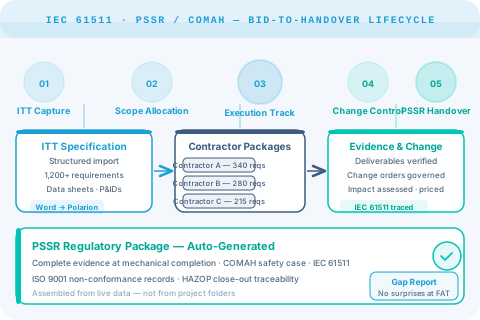
Manage bid and tender specifications, project requirements, and contractor deliverable traceability in a single governed system — from ITT through contract close-out and asset handover.
Major capital projects in oil and gas — subsea systems, FPSO topsides, refinery upgrades — are governed by tender documents that run to thousands of pages. Technical specifications, functional requirements, and regulatory obligations are embedded in Invitation to Tender (ITT) packages, vendor data requirements, and contract schedules.
When those requirements are tracked in Word and Excel, the gap between what was tendered and what is delivered only becomes visible at factory acceptance testing — or worse, at commissioning. The cost of late-stage scope gaps in offshore capital projects is measured in weeks of lost production, not change-order fees.
Technical requirements scattered across ITT sections, data sheets, P&IDs, and project specifications with no single traceable list — leaving gaps invisible until testing.
Scope changes issued mid-project with no traceability to original requirements. Impact assessment done by memory, not system — leading to unpriced risk and contractual disputes.
Contractor data deliverables (calculations, drawings, test records) received without structured verification against the requirement they were meant to satisfy.
PSSR, COMAH, and operability verification require a complete evidence package at mechanical completion. Assembling this from project folders takes months and remains incomplete.
Polarion ALM manages the complete project requirements lifecycle, not just engineering software. Here is how Corbinsoft implements it for capital project delivery.
Import technical specification requirements from ITT documents into structured Polarion work items.
Allocate requirements to bid packages, cost estimates, and contractor scope schedules.
Track each requirement against contractor deliverables, inspection records, and HAZOP close-outs.
Workflow-controlled change orders with impact assessment on scope, cost, and schedule — fully documented.
Generate complete PSSR and regulatory evidence package from live data at mechanical completion.
Apply the same engineering rigour that aerospace and medical use to manage their most critical requirements — to the tendering and delivery process in oil and gas.
Import and structure thousands of requirements from ITT documents, data sheets, and project specifications into Polarion work items — numbered, categorised, and owner-assigned from day one.
Allocate requirement subsets to individual contractors and sub-contractors. Each party sees only their scope. All deliverables are linked back to the originating tender requirement.
At any point in the project, run a gap report showing which tender requirements have verified deliverable evidence and which remain open — before the client does it for you at FAT.
Every scope change goes through a structured workflow: initiated, impact-assessed against affected requirements, priced, and approved — with a complete audit trail for contractual dispute resolution.
Safety Instrumented System requirements from HAZOP, LOPA, and SIL determination are managed with traceability to SIS design specifications, FAT records, and site acceptance testing.
Generate a structured PSSR evidence package, COMAH safety case traceability, and operability verification documentation from live Polarion data — ready for the certifying authority at plant start-up.
Talk to us about your capital project structure, contractor ecosystem, and the regulatory handover requirements at completion. We'll show you how Polarion fits the bid and tender lifecycle.